
Latest Editions
-
 Quest Issue 2, 2022
 -
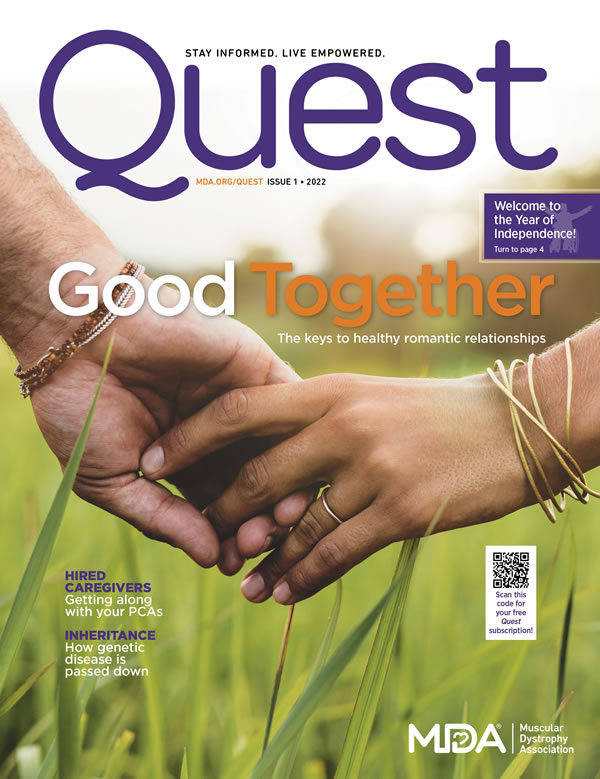 Quest Issue 1, 2022
 -
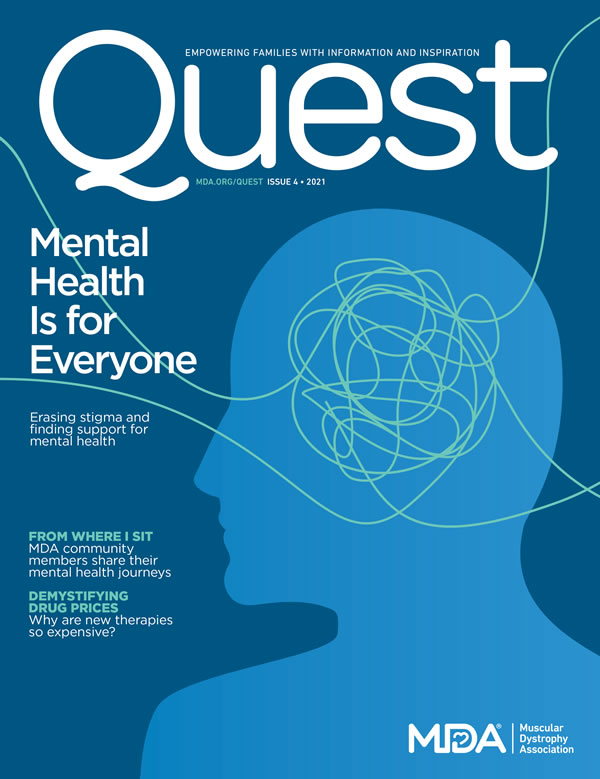 Quest Issue 4, 2021
 -
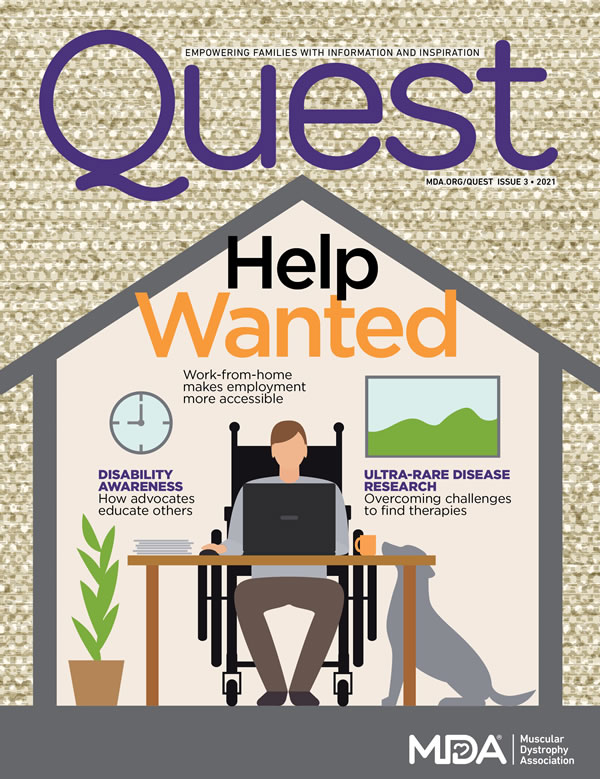 Quest Issue 3, 2021
Recent Quest Articles

Smiles for Miles
When Jon Burcaw attended his first MDA Ride for Life in 1999 with his son Shane, who has spinal muscular atrophy (SMA), they were simply there to support the Harley-Davidson riders raising money and awareness for MDA. Little did he know that by 2007 he would be known as “Smilin’ Jon” and have his own Harley with a special sidecar that makes entering and exiting easier for individuals with disabilities. “[My first Ride for Life] made me smile, and I’ve been pretty much stuck that way ever since,” Jon says.
Read More
Journeys of a Lifetime
Carden Wyckoff, a 24-year-old professional with facioscapulohumeral muscular dystrophy (FSHD), went on her first piggyback adventure in 2015 when her brother Spencer carried her on his back through the Reebok Spartan Sprint, a tough three-mile obstacle course. After their second Spartan race in 2016 — and after Spencer appeared on national TV on “American Ninja Warrior” — Carden and Spencer were approached by a friend who had co-founded the travel company Vestigo.
Read More
Always Up for a Challenge
Nine-year-old Lily Sander doesn’t remember life without Charcot-Marie-Tooth disease (CMT), but she has never let it hold her back. After undergoing major foot surgery three and a half years ago to correct the extreme curving of both feet caused by CMT, Lily had to learn how to walk again. She now walks with the help of leg braces and has been thriving.
Read More
Impacted by Friedreich’s Ataxia? Share Your Voice!
An upcoming Friedreich’s ataxia (FA) Patient-Focused Drug Development (PFDD) meeting with the U.S. Food and Drug Administration (FDA) is your opportunity to tell the FDA and drug developers about challenges and burdens you have experienced with FA, and share your thoughts about what is most important to you in evaluating potential new treatments for the disease.
Read More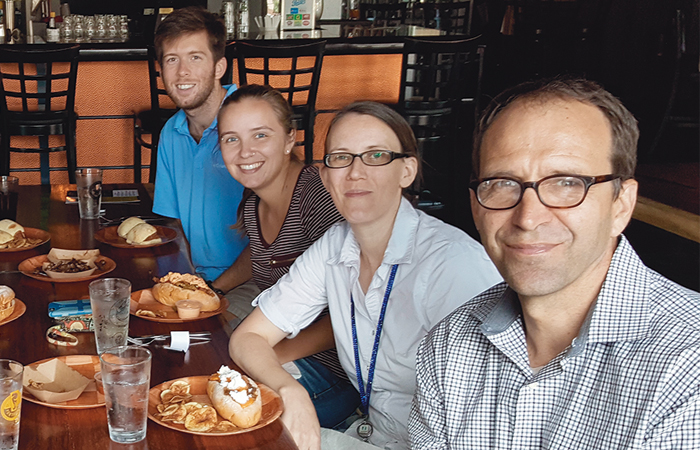
Clinic Connection
Dwight Koeberl, M.D., Ph.D., a pediatric medical genetics specialist at Duke University Medical Center in Durham, N.C., attended his first MDA Lock-Up six years ago as a guest. “I saw a patient at the clinic [whose family] was doing the MDA Lock-Up,” he says. “After I attended that with them, I have a sneaking suspicion they mentioned my name to MDA [as a potential Lock-Up participant], and that was how I got involved.”
Read More
Education Essentials
Some students with complex physical or cognitive needs have Individualized Education Plans (IEPs), and some have 504 plans (named for Section 504 of the Rehabilitation Act of 1973), while others may not elect to use these plans. Both plans are intended to assist students in gaining access to a free appropriate public education, but there are differences between the two methods. Here are some tips on how to choose a plan and implement it to improve your child’s educational experience.
Read More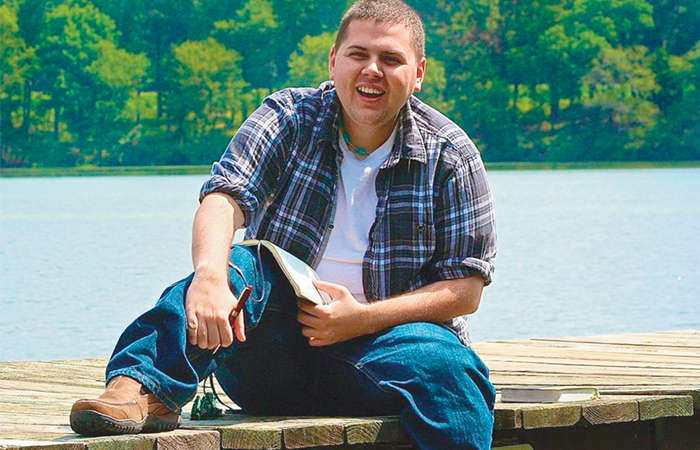
Interdependence Day
My understanding of the concept of independence recently blew up in my face. Part of independence, for me, has been my ability to live on my own. In fact, I live 1,200 miles away from any relatives. Sure, I cannot walk very far, but a massive part of embracing my freedom has been my ability to drive, to travel and to go where I want when I want.
Read More
Summer Strong
Elvira, a 16-year-old with spinal muscular atrophy (SMA), has been attending MDA Summer Camp near her hometown of Amarillo, Texas, since she was 7. Between campers, counselors and other volunteers, she has made a lot of friends and memories over the years, which is her favorite thing about attending camp.
Read More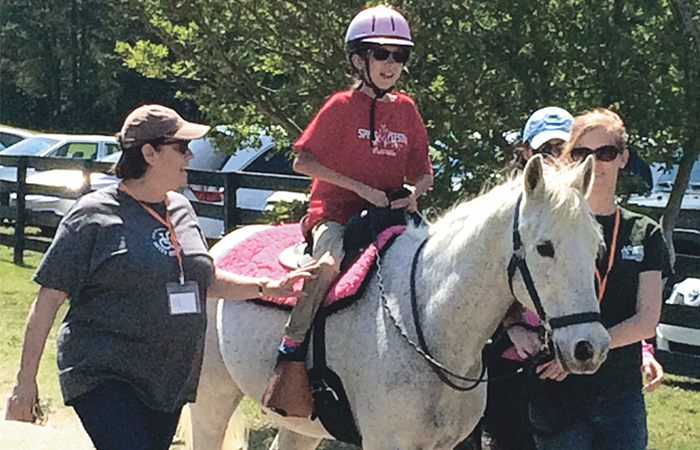
Riding High in the Saddle
Kierra Sunris, a typical 12-year-old, enjoys reading The Hunger Games, making silly faces to annoy her parents and riding horses. She rode for the first time at age 6. “I was afraid the horse would fall over. It’s kind of scary when you get on top of something that’s five feet taller than you are,” says Kierra, who has Ullrich myopathy (a form of congenital muscular dystrophy) and uses a power wheelchair.
Read More
MDA Research: Keeping Up the Momentum
What are the effects of steroids on muscle repair in patients with Duchenne muscular dystrophy (DMD)? How can gene therapy impact people with Charcot-Marie-Tooth disease (CMT)? Will identifying biomarkers cut down on the need for muscle biopsies for those with myotonic dystrophy (DM)?These are some of the pressing questions researchers in the neuromuscular disease field are asking — and MDA is providing support to help them find answers. Our latest efforts include the award of 29 new research and development grants to support scientists working to bring treatments and cures to MDA families.
Read MoreMDA Resource Center: We’re Here For You
Our trained specialists are here to provide one-on-one support for every part of your journey. Send a message below or call us at 1-833-ASK-MDA1 (1-833-275-6321). If you live outside the U.S., we may be able to connect you to muscular dystrophy groups in your area, but MDA programs are only available in the U.S.