
Latest Editions
-
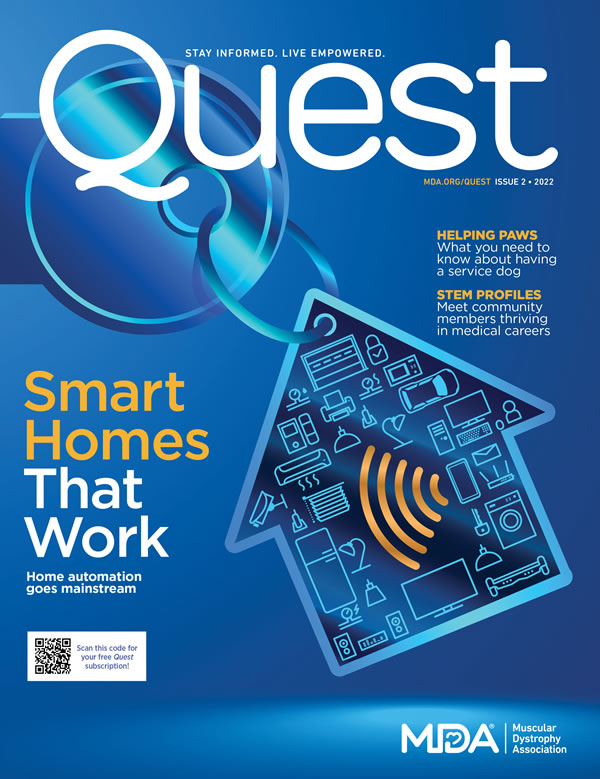 Quest Issue 2, 2022
 -
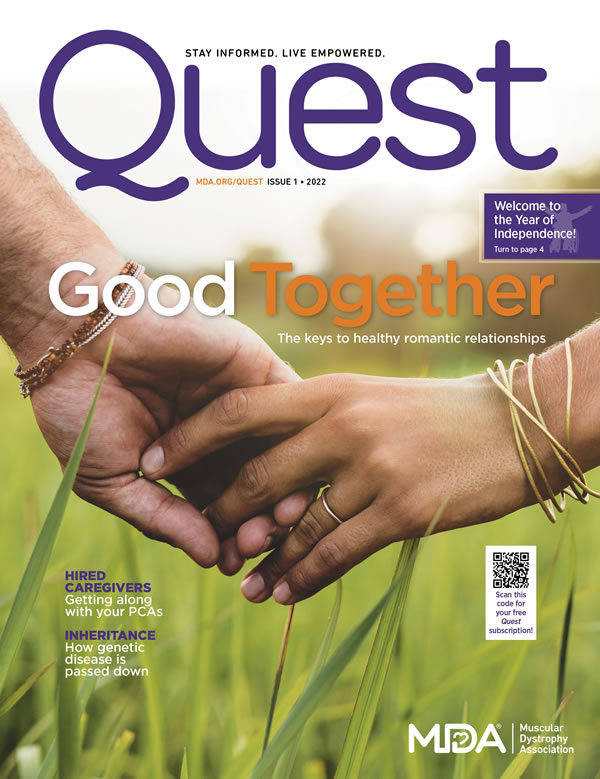 Quest Issue 1, 2022
 -
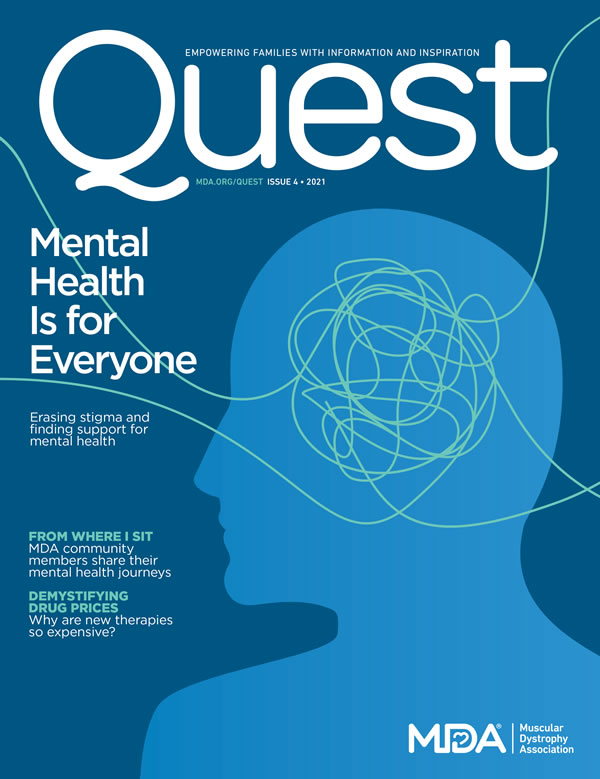 Quest Issue 4, 2021
 -
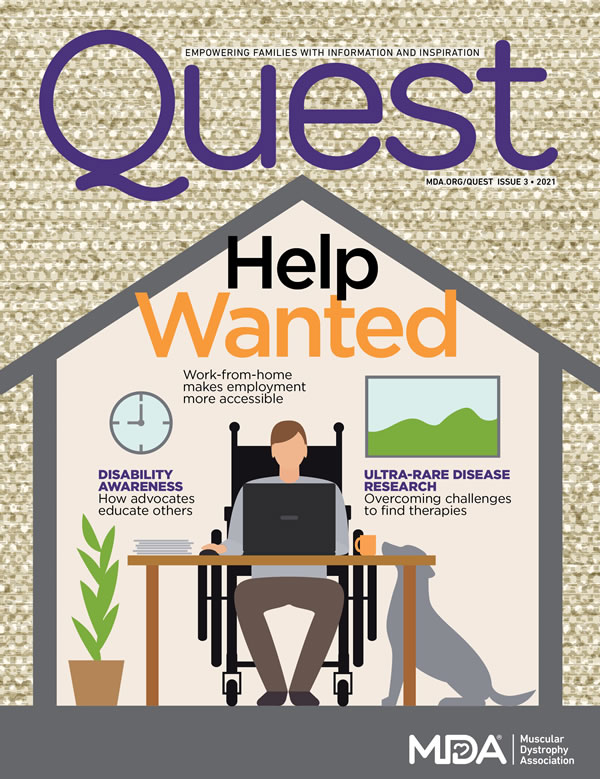 Quest Issue 3, 2021
Recent Quest Articles

Career Starters
For Victoria Haire, landing a summer internship in the Dallas MDA office this year wasn’t simply a way to see what it was like to work in the business world; it was life-changing.Haire, who hails from Louisville, Ky., was diagnosed with limb-girdle muscular dystrophy (LGMD) at age 5. As part of her five-week internship with MDA, she got to work in an MDA Care Center alongside MDA’s family care specialists. “I knew right in that moment that this is what I need to do,” says Haire, 21, a University of Southern Illinois student studying communications with a minor in social work. “I texted my parents on the first day and said, ‘This is my calling.’”
Read More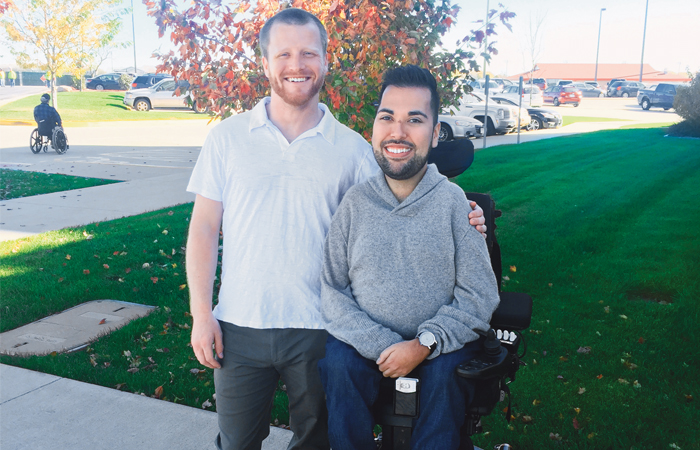
Caregiving: Choosing with Care
Amid the wave of anxiety and emotion that can accompany living with a neuromuscular disease, Bill and Sharon Sumner saw a few things clearly the day they learned of Sharon’s ALS diagnosis. “I knew we would keep her at home, and I knew I would be the one to take care of her,” Bill says. The Sumners were in a prime position to make such choices. Having sold his successful manufacturing business, Bill had the time to devote to his wife and the money to hire personal care attendants (PCAs) as her condition progressed. But for many families, when a diagnosis is made or a disease progresses to the point where daily care is needed, the decision isn’t as clear-cut. Financial means, work schedules, family dynamics and the extent of a support system are among the many factors that go into planning in-home care.
Read More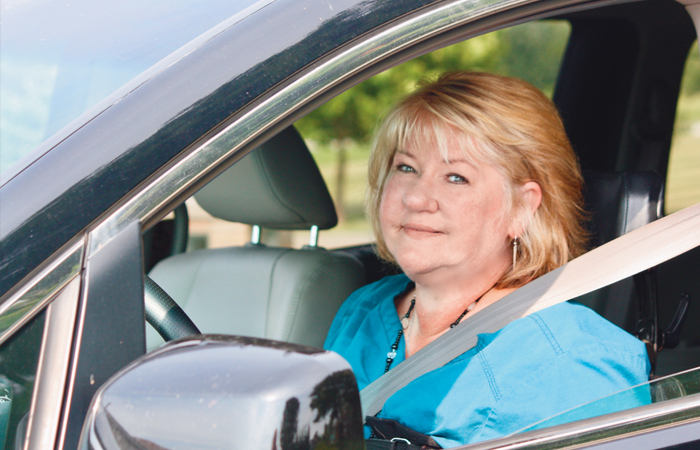
Support System
When Cindi Reamer, a 58-year-old auditor and coder with limb-girdle muscular dystrophy (LGMD) was a child in Fort Wayne, Ind., she told her orthopedist that she wanted to work for him one day. At age 20, she did just that. Steven Glock, M.D., hired her as a telephone switchboard operator, and she has been working in his practice ever since, moving from the switchboard into coding.
Read More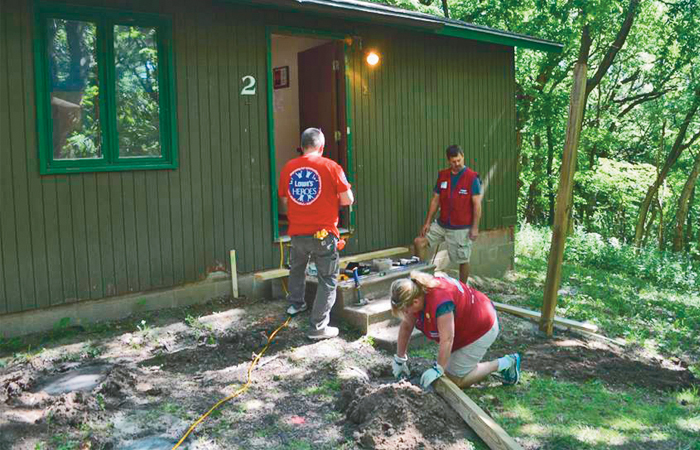
Helping Hands
An MDA partner since 2001, Lowe’s takes great pride in improving the communities it serves. To date, Lowe’s and its loyal customers have raised more than $63 million to support MDA’s mission. Lowe’s also supports MDA by encouraging their employees to volunteer throughout the year and to join together in select improvement projects. This year’s projects included helping to construct new decks and ramps for the MDA Summer Camp at Camp Calvin Crest in Nebraska.
Read More
Carry On
For Ed Walsh, who has been a U.S. Postal Service letter carrier for 23 years, getting involved with MDA came naturally. Walsh is a member of the National Association of Letter Carriers (NALC) Branch 358 in New York. NALC was one of MDA’s first national sponsors, originally partnering with MDA in 1952. Beyond that official partnership, Walsh and his fellow branch members have found personal connections to MDA.
Read More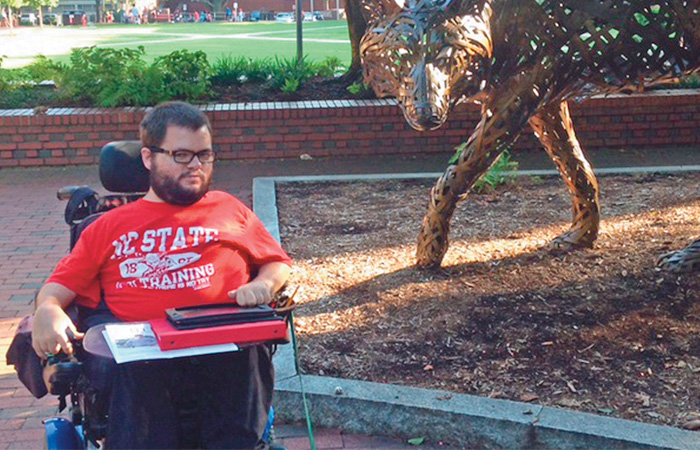
Surviving and Thriving in College
College is a blast, but it can come with a pile of challenges the size of a mountain. Just look at the hundreds of articles there are advising students on how to conquer stress, manage time and deal with that one professor who may as well have been stripped from an ‘80s movie. College can be the best — and the most draining — time in a person’s life.
Read More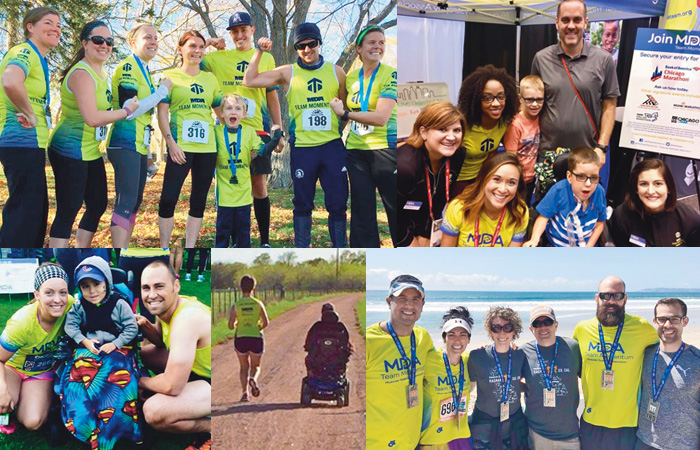
Running the Country
MDA Team Momentum participates in a dozen (and counting) marathon and half-marathon events every year. These events feature hundreds of runners and walkers who raise money for MDA, and they take place all across the United States, from San Diego to Chicago to Boston.Here are some of the groups of runners who have made an impact fundraising for and raising awareness of MDA.
Read More
Progress Now Summer 2017
The U.S. Food and Drug Administration (FDA) in May approved edaravone (brand name Radicava) to treat ALS. Under development by Mitsubishi Tanabe Pharma America, Radicava is the first drug to be granted FDA approval to treat ALS in the United States in more than 20 years.Radicava is thought to work by relieving the effects of oxidative stress, which has been suspected to play a role in the death of nerve cells called motor neurons in people with ALS. (Oxidative stress is an imbalance between the production of free radicals and the ability of the body to counteract or detoxify their harmful effects with antioxidants.) Targeting this pathway could potentially preserve motor neuron health, which could in turn keep muscles functional for a longer period of time.
Read More
Mobility: Choose the Right Wheels
Purchasing a vehicle can be a daunting experience for many people. Choosing one that accommodates an individual who uses a wheelchair often presents an additional layer of decision-making. When you are ready to buy an accessible vehicle, be prepared to ask and answer a lot of questions. The process typically begins with an evaluation by a certified driver rehabilitation specialist (CDRS). A CDRS conducts an assessment of your abilities and limitations, provides driving instruction and can collaborate with a mobility dealer to determine which vehicle and equipment is the best fit.
Read More
Sharing, Learning and Discovery
While it’s easy to understand how funding research and providing care for kids and adults from day one help individuals with neuromuscular diseases live longer and grow stronger, hosting conferences and facilitating dialogue also have tremendous benefits for saving and improving lives.MDA-supported conferences bring together the world’s best researchers, top clinicians, industry leaders, other stakeholders and families to share knowledge, ideas and best practices; to foster collaboration; to strategize around advocacy initiatives and to connect with like-minded individuals. These experts and influencers in the muscular dystrophy community come together with one goal in mind: to accelerate progress for our families.
Read MoreMDA Resource Center: We’re Here For You
Our trained specialists are here to provide one-on-one support for every part of your journey. Send a message below or call us at 1-833-ASK-MDA1 (1-833-275-6321). If you live outside the U.S., we may be able to connect you to muscular dystrophy groups in your area, but MDA programs are only available in the U.S.