
Latest Editions
-
 Quest Issue 2, 2022
 -
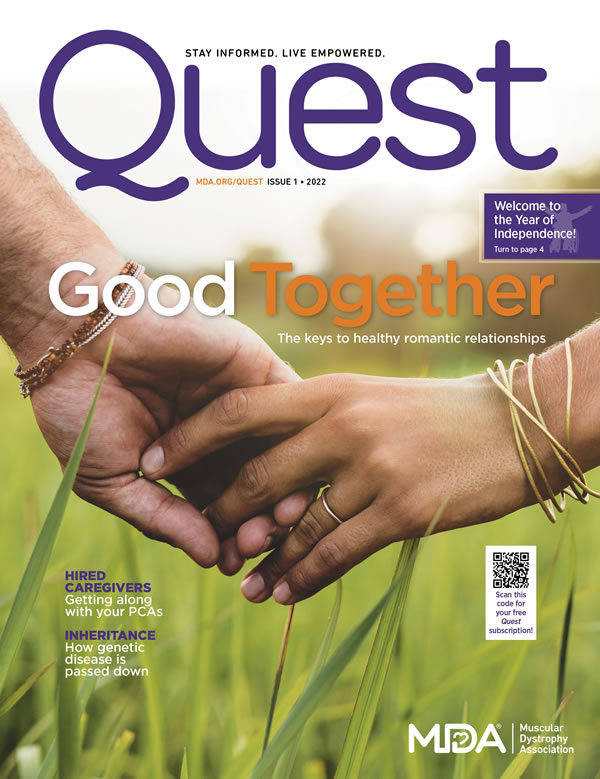 Quest Issue 1, 2022
 -
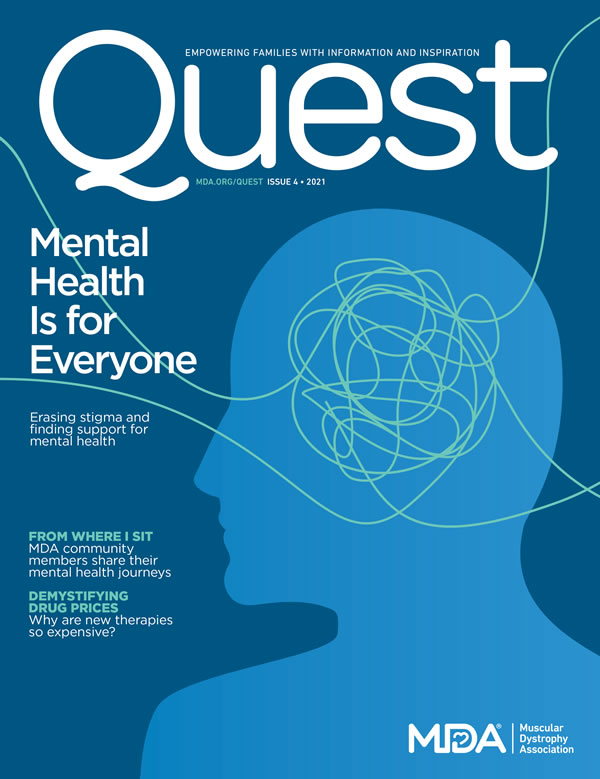 Quest Issue 4, 2021
 -
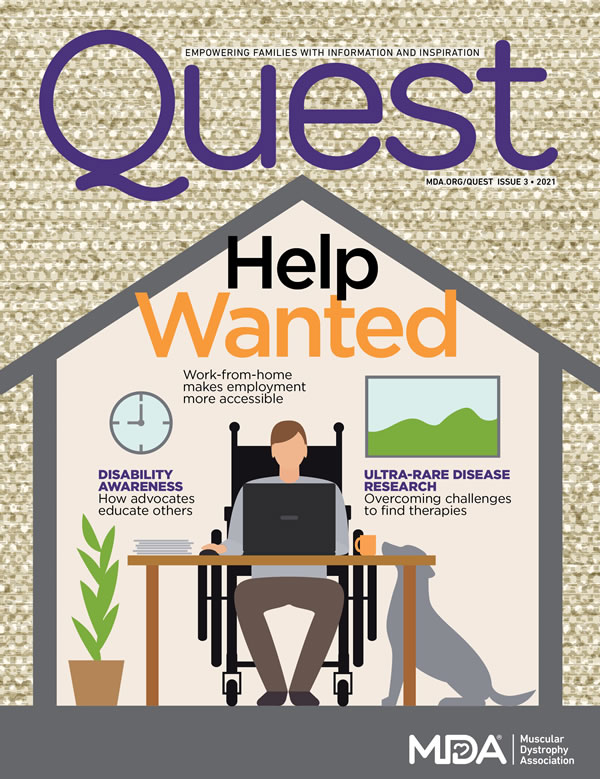 Quest Issue 3, 2021
Recent Quest Articles
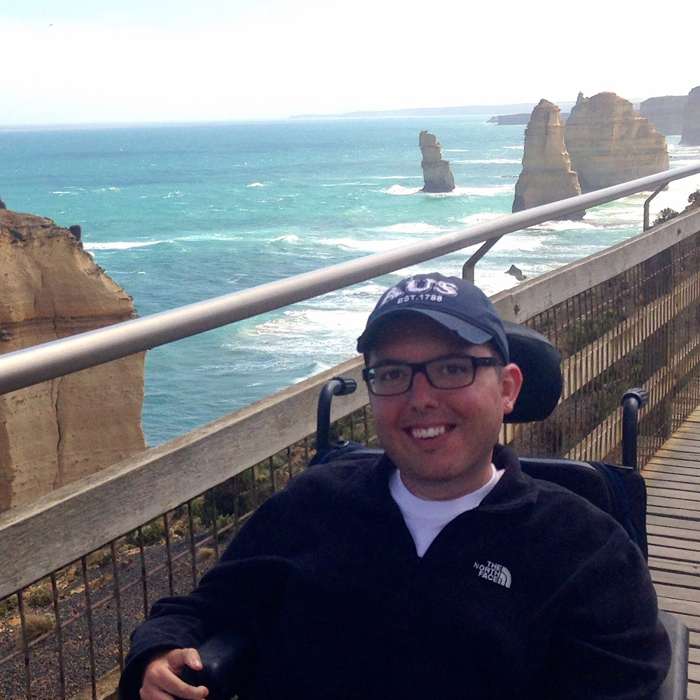
Four Steps to Booking a Hotel Room for Wheelchair Users
As an avid traveler who happens to be a wheelchair user, I do my fair share of booking hotels. It's a complicated process that I've somewhat mastered over the years. While most people can just go online and book their ideal hotel in a matter of minutes, it's not quite that easy for us wheelchair users. I recently called a hotel to ask if they were accessible, and they told me that they certainly were.
Read More
Searching for Answers Across Diseases
The $11 million commitment, MDA’s largest such award in three years, underlines MDA’s dedication to investing in research across diseases with the expectation that increased understanding in one disease will inform progress and lead to research and medical breakthroughs in other disease spaces.
Read More
Web Exclusive: Personal Finance Q&A with Michael Morris
In Investing in the Future, Quest explores the idea that financial planning can be complicated, and that it pays to do your research and learn about your options. To help build upon the information provided in Investing in the Future, Michael Morris, a recognized field leader on financial capability for people with disabilities, provides some answers to commonly asked questions related to the topic of personal finance.
Read More
From My Mother: Surviving and Thriving in a Family Ravaged by Genetic Disease
Editor’s note: Author Darcy Leech is an instructional technology coach in Great Bend, Kan. She has published From My Mother, a memoir on losing her mother and brother to myotonic muscular dystrophy, from which this chapter is excerpted. She lives with her husband, Daniel, and their 4-year-old son, Eli, and 5-month-old daughter, Hannah. She enjoys technology, volunteering with service groups and writing for healing. Leech participated in her first MDA Muscle Walk in April for the Wichita MDA office and had an amazing experience.
Read More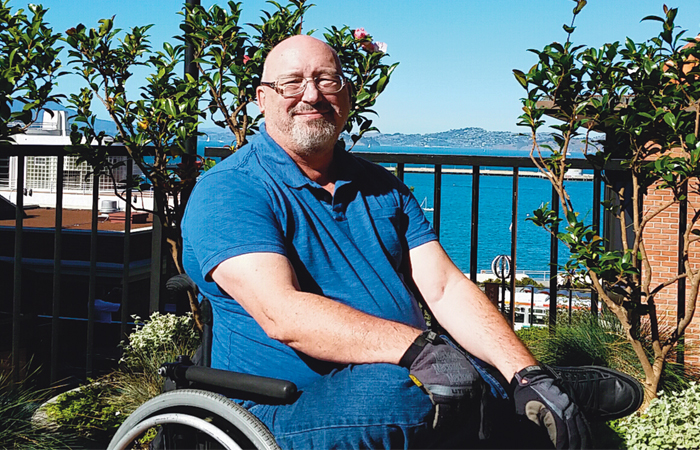
More than a Number
I am a statistic. In 2012, at 57 years of age, after almost two years of worsening symptoms, I was diagnosed with ALS. Being a white male at my age, in many ways I was the “typical” ALS patient. Of course with a disease like ALS, there really is no such thing as a typical case. Each of us is unique, each of us is different. This disease attacks men and women, young and old, of every race and religion. This disease attacks rich and poor alike. And yet it is a rare disease, so rare as to be deemed “orphaned,” at least until the Ice Bucket Challenge.
Read More
Camp Connection
For Sylvia Colt-Lacayo, a high school freshman with muscular dystrophy from Oakland, Calif., attending her first MDA Summer Camp at age 14 was a revelation. “My favorite thing wasn’t even an activity, although all the activities were great,” she says. “It was the fact that it was a week where I never felt insecure about my wheelchair and the different things that happen with my body. I felt comfortable because everyone around me had similar issues or knew what it was like to deal with those issues. The only way I can describe it is basically for a week I get to accommodate the world, the world doesn’t have to accommodate for me.”
Read More
Strike a Pose
Editor’s Note: Always consult with your MDA physician and MDA Care Center team before beginning any kind of exercise program. Twenty-eight-year-old Chelsea Singer is not the typical yoga instructor. Her feet are deformed as a result of contractures and stiffened joints. Her hands shake, her knees frequently dislocate, and she lacks sensation in her extremities. Diagnosed with Charcot-Marie-Tooth disease (CMT) at age 11, Singer grew up believing she was frail and found physical activity, such as hiking, painful.
Read More
Home Smart Home
As the world awaits the full realization of the Internet of Things (IoT) — the computer- based platform on which all home automation will reside — the individual products and innovations that will one day comprise it are slowly trickling out. These smart home technologies will likely end up in all homes in the future; however, the difference in their effect on a typical homeowner compared to one living with muscular dystrophy, ALS or a related muscle- debilitating disease is the difference between additional convenience and a game-changing transformation.
Read More
Access MDA Spring 2016
Dennis Bracety had been fighting fires in Tucson, Ariz., for almost 10 years when he first started to experience symptoms of what he would eventually find out was dermatomyositis, a neuromuscular disease that causes inflammation of the muscles and skin.“My symptoms started in November 2010 at our annual Turkey Bowl Thanksgiving event,” Bracety says. “I felt sluggish, and I didn’t feel alert. Something was off, and I knew it. For the next three weeks I ignored the symptoms; I’m a macho guy, I figured I would be fine. It wasn’t until Christmas Eve [that I recognized something was seriously wrong] when I was on duty, and I just couldn’t get out of bed.”
Read More
Strength in Numbers: ALS Allies
“If I had all my physical strength and everyday freedoms from before being diagnosed with ALS, I would want to give one more bear hug and kiss to each of my girls. Being able to physically pick them up and squeeze them in my arms is what I miss most in life. MDA and its wonderful, compassionate and helpful staff are an essential and integral part of my life, as well as others like mine." — Keith Gawrick, father of three daughters who is living with ALS
Read MoreMDA Resource Center: We’re Here For You
Our trained specialists are here to provide one-on-one support for every part of your journey. Send a message below or call us at 1-833-ASK-MDA1 (1-833-275-6321). If you live outside the U.S., we may be able to connect you to muscular dystrophy groups in your area, but MDA programs are only available in the U.S.