
Latest Editions
-
 Quest Issue 2, 2022
 -
 Quest Issue 1, 2022
 -
 Quest Issue 4, 2021
 -
 Quest Issue 3, 2021
Recent Quest Articles

Progress Now Winter 2017
Osaka-based Mitsubishi Tanabe Pharma’s new drug application for the drug edaravone (brand name Radicava) to treat people with ALS has been accepted by the U.S. Food and Drug Administration (FDA).An FDA decision on the drug is expected by June 16, 2017. Edaravone was approved last year in Japan and South Korea for the treatment of ALS and has been approved for the treatment of stroke since 2001.
Read More
In Good Hands
All parents need time to themselves, but for BJ Mirabile of Winchester, Mass., finding child care for her daughter Katie, who has spinal muscular atrophy (SMA), often proved difficult. “When she was younger, we had some neighborhood sitters and sitters through early intervention,” Mirabile says. But early intervention services are for babies and toddlers with developmental delays or disabilities. Now Katie is older, and she uses a power wheelchair, BiPAP (bilevel positive airflow pressure) machine and MIC-Key gastric feeding tube.
Read More
Advocate U
For many young adults, the college experience is a rite of passage and an exciting time for growth. This time comes with additional challenges and opportunities for the 9 percent of college students with disabilities in the United States. For some, it’s not just about the lessons that come from living away from their parents and families, making decisions about their future or navigating the world on their own. It’s also a chance to learn to advocate for themselves and others.
Read More
Focus on Wellness: Get Moving
Some individuals consider exercise a four-letter word, while others can’t seem to get enough. Whatever your feelings, the research shows that physical activity is good for everyone. Inactivity can lead to secondary health problems, such as high blood pressure and diabetes. A lack of exercise can quickly put on the pounds. Weakened muscles burdened with added weight is a double whammy.
Read More
Focus on Wellness: Getting Your ZZZs
Sixty percent of Americans have trouble sleeping, according to the National Sleep Foundation. For individuals with neuromuscular diseases, that number is likely higher, because disease-related factors, including limited mobility and respiratory problems, can make it difficult to achieve deep, restful sleep.
Read More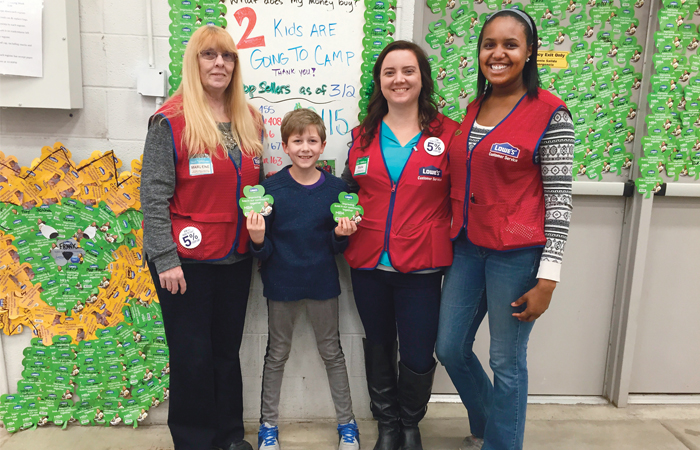
Shamrocks Spirit
This year marks the 35th anniversary of MDA’s Shamrocks fundraising partnership with retail stores across the country. To get in the Shamrocks spirit, we’d like to introduce you to some of the kids featured in this year’s campaign, which kicks off in February. Meet Gabrielle, age 14 When Gabrielle was diagnosed at the age of 1 with type 2 spinal muscular atrophy, her parents were told she wouldn’t see her third birthday. Now 14, Gabrielle is thriving and doesn’t allow anyone or anything to stop her from doing what she loves. She attended MDA Summer Camp for the first time in 2016, and her favorite memory was being able to go horseback riding.
Read More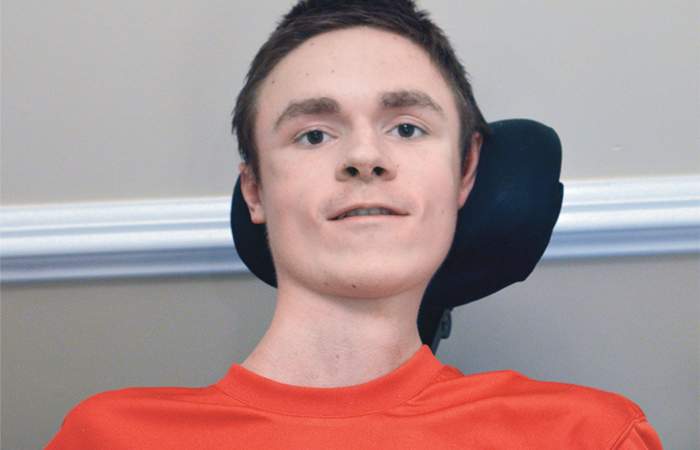
College Connection
Living with Duchenne muscular dystrophy (DMD) since the age of 2, Thomas Roy has seen the disease progress throughout his life. While he had always wanted to attend Rutgers University in New Brunswick, N.J., he assumed he would never be able to do so because of his living situation. However, when Roy found out about the online degrees Rutgers offers — and that the university would accept transfer credits from the community college he attended — everything changed.
Read More
Types of Clinical Trials
When a new product or approach is being studied, it is not usually known whether it will be helpful, harmful or no different than available alternatives. Investigators try to determine the safety and efficacy of the intervention by measuring certain outcomes in the participants. Phase 0 — Also known as “exploratory studies,” these trials test a small dose of a new drug in a few people as researchers explore how the drug may work in humans and ensure that it is safe. Trial participants may or may not have the disease the drug has been developed to treat.
Read More
Smart Assistive Mobility Products
Keeping pace with the latest assistive mobility products is a tall order. The marketplace is so dynamic, so innovative, so accelerated; it can be impossible to stay on top of what’s new, what’s different, what’s covered by insurance or what will enhance your mobility and independence. This edition of “Innovation” catches up with some of the smartest assistive mobility products on the market now, as well as tips for selecting the right types to meet your needs.
Read More
School Spirit
Between working as a resident assistant, being the philanthropy coordinator for her sorority Alpha Gamma Delta, acting as the 2016 Greek Sing Director, planning a study abroad trip to Australia and volunteering for other organizations, it’s hard to believe that Sarah Bellish, a sophomore at Baldwin Wallace University (BWU) who has spinal muscular atrophy (SMA), still has the time to advocate for improved accessibility on her college campus.
Read MoreMDA Resource Center: We’re Here For You
Our trained specialists are here to provide one-on-one support for every part of your journey. Send a message below or call us at 1-833-ASK-MDA1 (1-833-275-6321). If you live outside the U.S., we may be able to connect you to muscular dystrophy groups in your area, but MDA programs are only available in the U.S.