Latest Editions
-
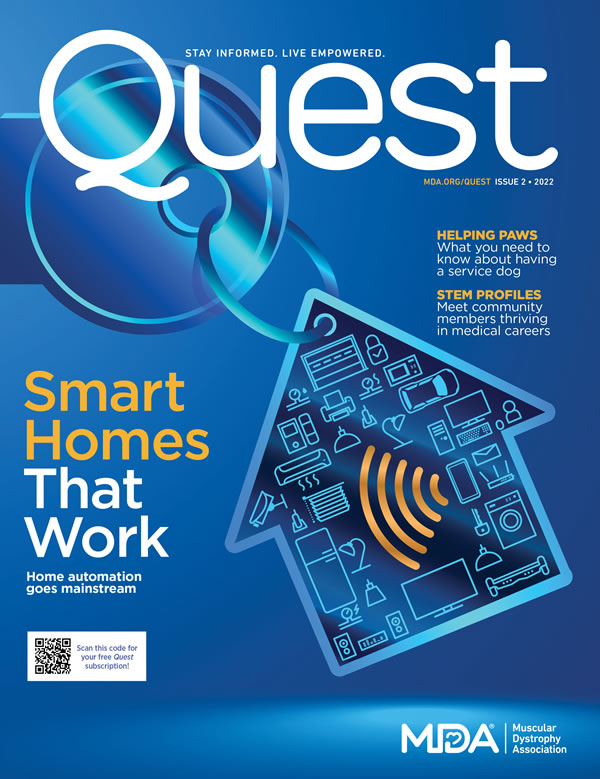 Quest Issue 2, 2022
 -
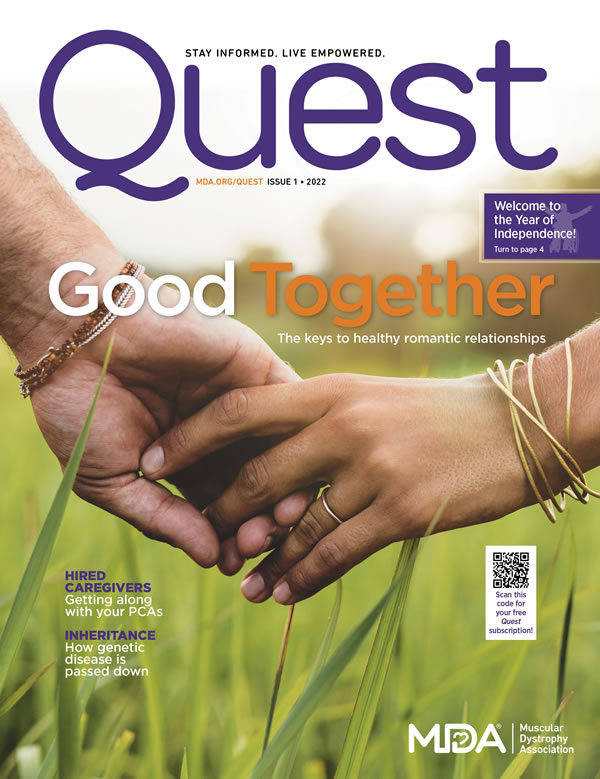 Quest Issue 1, 2022
 -
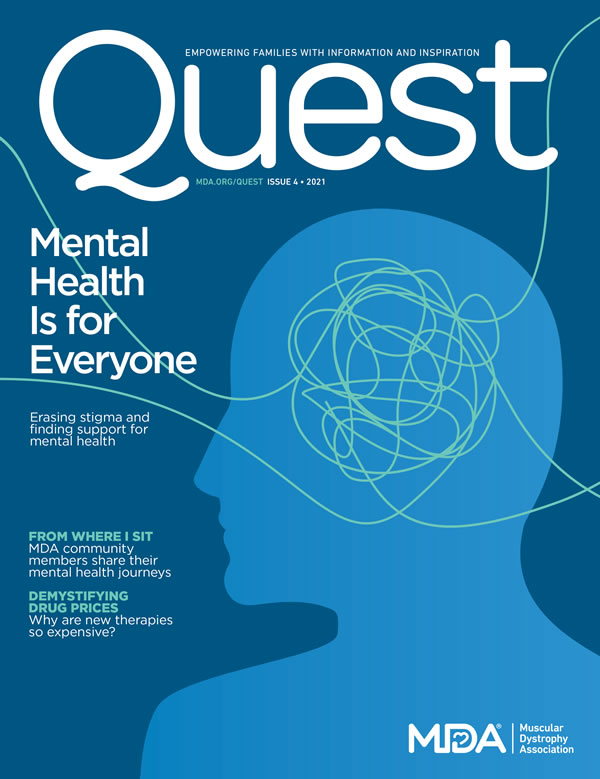 Quest Issue 4, 2021
 -
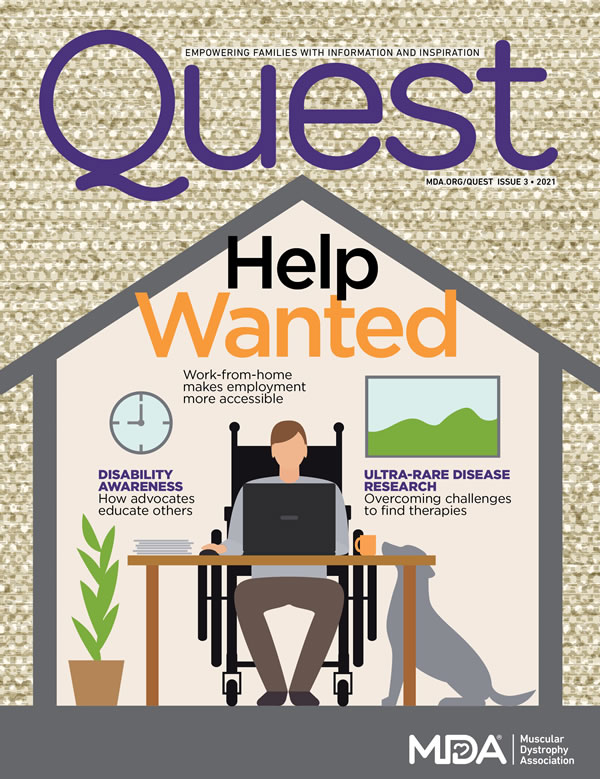 Quest Issue 3, 2021
Recent Quest Articles
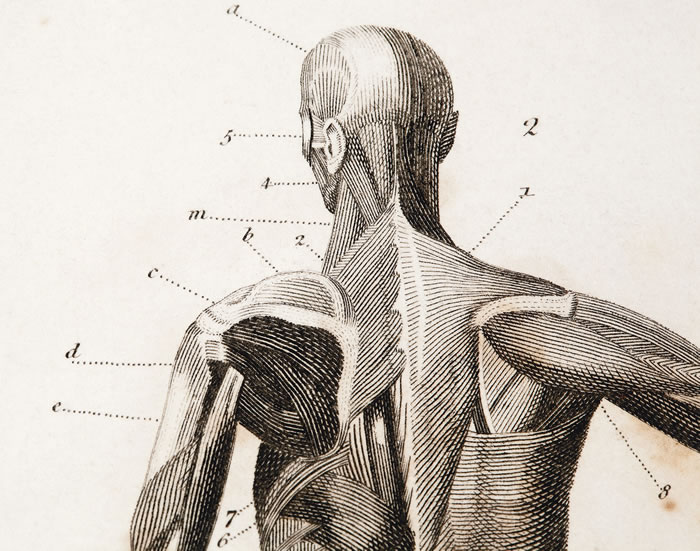
New Research Channels for Myotonia Congenita
Myotonia congenita is an inherited myopathy that prevents affected individuals from relaxing certain muscles after contracting them. The disorder causes muscle stiffness but not atrophy or shrinkage. On the contrary, it often leads to larger, stronger muscles.There are two types of myotonia congenita: Becker disease and Thomsen disease. The Becker type is inherited as an autosomal recessive trait, meaning it is produced when both parents contribute a defective gene. Becker is the more common and more severe form of the disease. It generally shows up between ages 4 and 12, though in rare cases it may occur as late as age 18. Symptoms tend to worsen over time.
Read More
Plan for a Bright Future
Josie Badger, DHCE, CRC, has used everything that life has handed her, including her disability, to pursue her dreams. Diagnosed with congenital myasthenic syndrome (CMS) at age 11, Josie now relies on a ventilator, power wheelchair, and 24-hour care. While many would see such challenges as a roadblock to pursuing an occupation, she has used them to fuel a career she is passionate about: advocating for disability rights.
Read More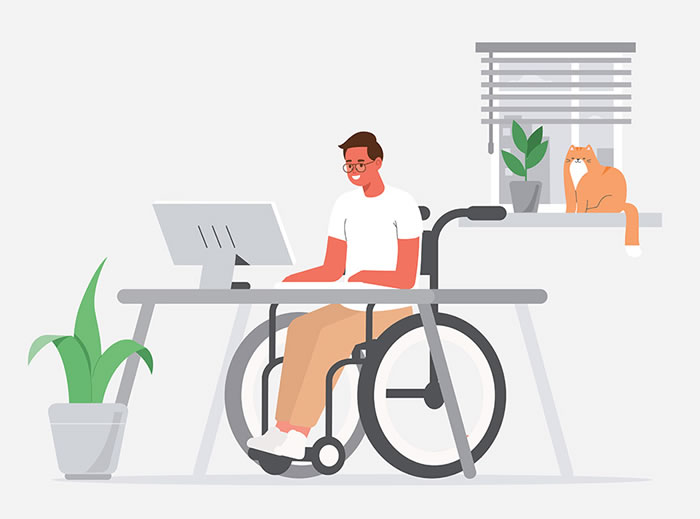
Affordable Accessibility at Home or On the Go
Whether converting a van for wheelchair access, modifying a shower, or widening doorways, maximizing accessibility is at the top of the to-do list for many individuals and families living with neuromuscular disease. However, the cost and the difficulty of planning these changes keep many people from checking those items off their list.
Read More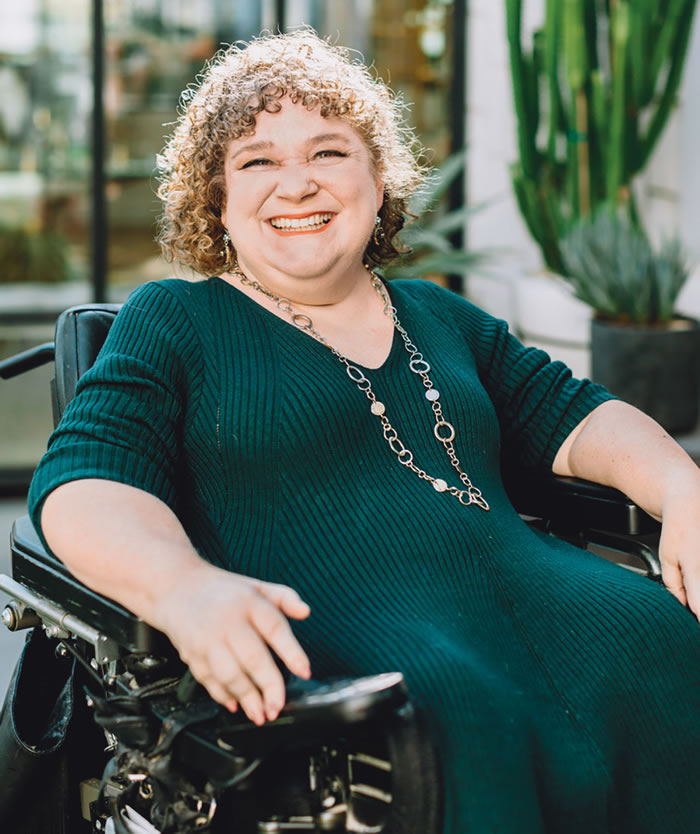
Disability… or Superpower?
When I Google the definition of the word “disability,” this is what is returned: a physical or mental condition that limits a person’s movements, senses, or activities. Period. End of story. That’s all they have to say about that.But I have my own definition of disability. I define it as an opportunity to learn or heighten skills like positivity, determination, problem-solving, and about a billion others. It is a differentiator. (Who wants to be like everyone else, anyway?) It is an opportunity to do hard things and show the world the ease with which you can pull them off. It is an opportunity to laugh at the surprising and ridiculous things that occur daily. And it is a tool you can employ — just by existing and being who you are — to impact people around you with lessons on compassion, kindness, and open-mindedness.
Read More
Creativity and Adaptability
As the novel coronavirus pandemic forced people to stay home and brought job loss or economic instability to many, a snapshot of the neuromuscular disease community shows examples of creativity and adaptability in the face of unexpected challenges. In three stories, members of our community share how they handled the pandemic’s financial impact.
Read More
From a Distance
When Faith Fortenberry’s elementary school closed in March because of the novel coronavirus pandemic, she missed seeing her friends and teachers every day. An outgoing 9-year-old living with spinal muscular atrophy (SMA), Faith thrives on social interaction. Even so, she found that online learning offered some advantages.
Read More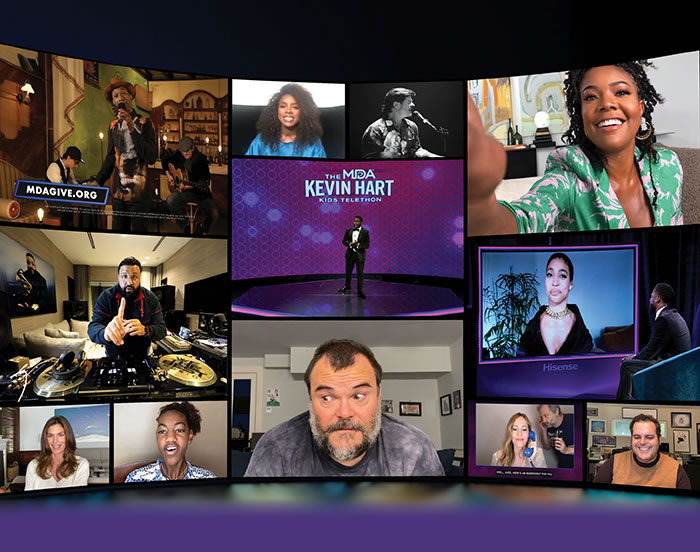
Reimagined and Moving Forward
On Oct. 24, actor and comedian Kevin Hart, dozens of his celebrity friends, and the MDA community joined together to raise funds for research, care (including Summer Camp and educational programming), and advocacy during The MDA Kevin Hart Kids Telethon.“This was an incredible experience — bringing the work of the Muscular Dystrophy Association forward,” said Kevin, who hosted the two-and-a-half-hour live event. “It’s been an honor to collaborate with MDA and educate the public about supporting people with disabilities. We are all in this together.”
Read More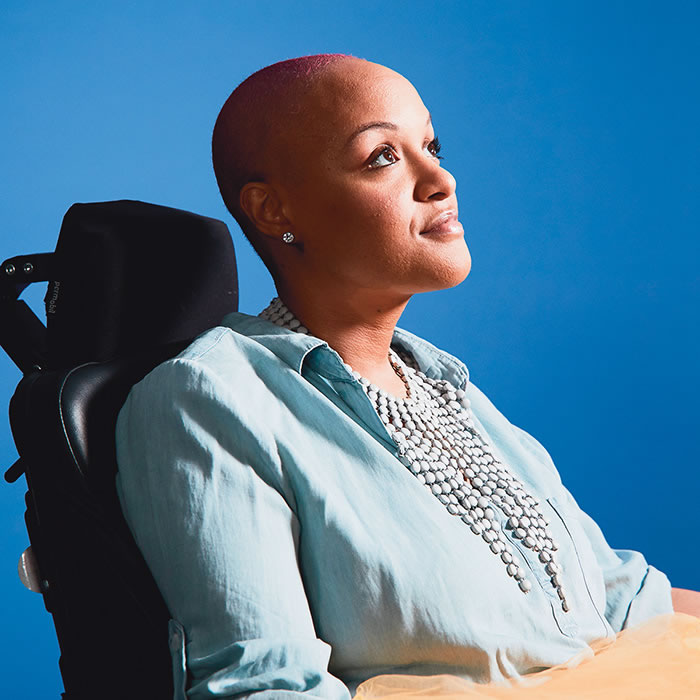
Business Unusual
Over the summer, I wished I could go to the movies, enjoy a meal out with friends, and explore the latest fashions at my favorite malls. Instead, I didn’t go any farther than the parking lot outside my apartment building.But, honestly, I wasn’t brought down by sheltering in place. I’m really a homebody, and I’ve worked hard to make my home my sanctuary. Also, in some ways, the COVID-19 pandemic ended up being a blessing in disguise.
Read More
2020 Reader Photo Contest Winners
Congratulations to Julie MacIntyre of Millville, NJ, our Lasting Impression Photo Contest winner.Julie, 32, was three months post-heart transplant when she and her boyfriend, Barry, went parasailing during a weekend trip to Ocean City, NJ, in 2017.“It was the first time I realized that I can do things now that I wasn’t able to for a really long time,” says Julie, who lives with limb-girdle muscular dystrophy (LGMD). “It was one of the best experiences I’ve had, even to this day.”
Read More
Clinical Trials During COVID-19
As novel coronavirus infections and deaths continue to climb across the United States, so do concerns about the success of more than 100 clinical trials in amyotrophic lateral sclerosis (ALS), Duchenne muscular dystrophy (DMD), spinal muscular atrophy (SMA), and other neuromuscular diseases.These anxieties range from the ability of pharmaceutical companies to conduct valid, verifiable trials in the midst of a pandemic to worries that the US Food and Drug Administration’s (FDA’s) focus on COVID-19 will take attention away from rare genetic disorders.
Read MoreMDA Resource Center: We’re Here For You
Our trained specialists are here to provide one-on-one support for every part of your journey. Send a message below or call us at 1-833-ASK-MDA1 (1-833-275-6321). If you live outside the U.S., we may be able to connect you to muscular dystrophy groups in your area, but MDA programs are only available in the U.S.